


KATHMANDU, AUGUST 7
Veteran Bangladeshi social activists and young South Asian activists have cautioned that recent youth-led uprisings across the region are in danger of losing their transformative potential unless movements go beyond surface change, tackle rising religious radicalism, and demand real power-sharing for women and marginalised groups.
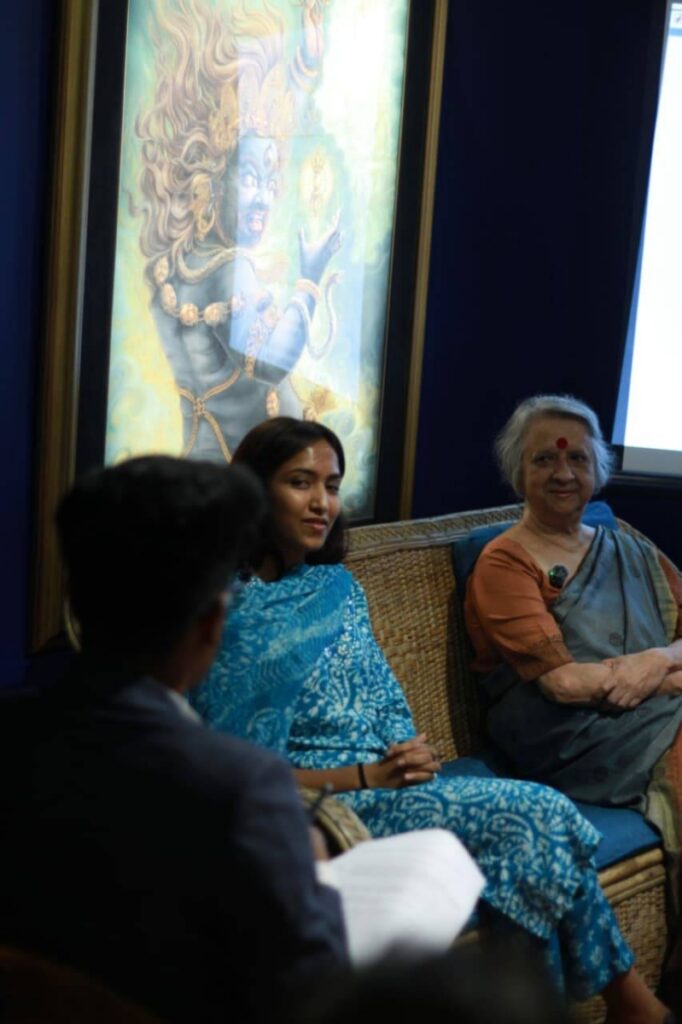
In a broad intergenerational conversation organised by Intergenerational Civic Forum (ICF) in Kathmandu today, Bangladeshi activist and feminist Khushi Kabir, who has worked for over 40 years at the grassroots level with rural landless peasants, indigenous communities and other marginalised groups, emphasised that feminism has to be intersectional in identity and power. “Everything is a feminist issue because fifty per cent of the population are women,” she said. “You cannot talk about changing a democracy without talking about the needs of the fifty per cent.”
She described the Gen Z and youth mobilisations that overthrew or destabilised governments in Sri Lanka, Bangladesh, Nepal and parts of India as a source of hope. But she warned against complacency. “It would be a shame to think you have done it and that’s it…” She noted that the movements were primarily reactions to corruption, nepotism, authoritarian control and unfair quota systems, rather than fully planned blueprints for new systems.
Asmita Shah, a 24-year-old feminist who began her activism at the age of 17, expressed concern. “Transformative politics always begin at the grassroots level… Changing surface-level pieces without addressing grassroots issues results in minimal change.”
She questioned how representative formal 33 per cent women’s quotas actually are when local deputy mayors are often controlled by male relatives and whether post-protest governments truly hear youth mandates.
On political representation, Kabir acknowledged that 33 per cent quotas are not ideal – parity is – but they remain a necessary minimum when major parties routinely offer far less.
Women were among the most determined street protesters in Bangladesh’s 2024 transition, facing beatings, arrests and deaths. However, the subsequent negotiation tables were almost entirely male, with only a small number of women nominated. The parties’ claim that they lacked the right people to nominate was dismissed.
“When you nominate men, how perfect are the men’s nominations? … Why do you believe a woman cannot reach voters?” Kabir questioned.
The panel also discussed the rise in regressive religious politics throughout the region. Groups that oppose women’s education and employment while accepting reserved parliamentary seats were described as a direct threat that must be confronted by young people.
“Youth are not a homogeneous group,” Kabir said, “just as women, the poor and queer communities are not.”
Responding to concerns about toxic feminism circulating online, Kabir said dogmatism exists in all ideologies. “As a true feminist, you cannot afford to be dogmatic … One of my biggest works is not to work with women only, but to start talking about changing the mindset of men… so that men have to start learning how to accept women not as a category, but as human beings.”