


KATHMANDU, SEPTEMBER 10
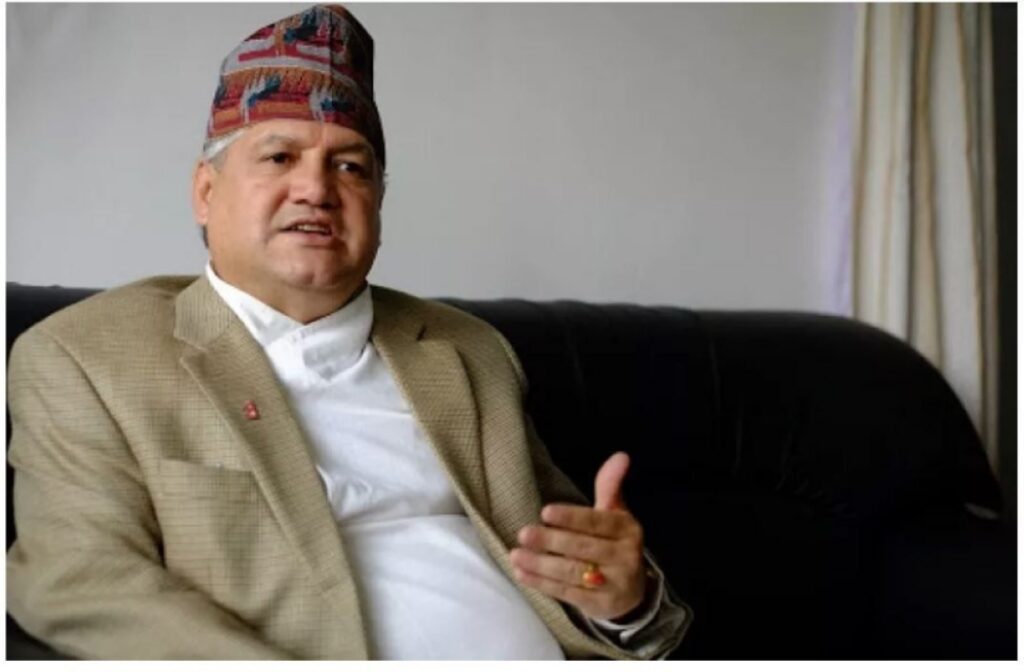
National Assembly member Sunil Bahadur Thapa has urged the government to prepare a comprehensive assessment of the damage caused by the Bhotekoshi-Trishuli floods and make an evidence-based, cost claim for international climate finance and loss-and-damage support.
Speaking in the National Assembly today, Lawmaker Thapa described the August 26 flash floods in the Bhotekoshi River as a national disaster rather than a routine flood, saying the devastation had raised serious questions about Nepal’s disaster preparedness, early warning systems, rescue capacity and reconstruction mechanisms.
The floods have caused extensive damage in Rasuwa, Nuwakot, Dhading, Gorkha and Chitwan. Thapa said the number of casualties and missing people was still not final, while international reports as of September 9 had put the combined death toll in Nepal and Tibet at more than 1,300, with thousands reported missing. He cited an estimated economic and physical loss of around Rs 387.5 billion in Nepal.
Thapa said Nepal, as a climate-vulnerable Himalayan country with a negligible contribution to global greenhouse gas emissions, had every right to seek international support through climate-finance and loss-and-damage mechanisms. “Seeking support for loss and damage is not begging. It is a legitimate and just demand for climate justice,” he said.
However, he criticised the government’s handling of the issue, saying its communication with the United Nations did not appear to include a clear financial demand based on a comprehensive assessment of the country’s losses. He said there was no integrated national assessment of damage and loss, verified sector-wise data or a transparent, costed plan for rehabilitation and reconstruction. An appeal without a clearly stated financial requirement, he argued, could weaken Nepal’s credibility in international climate-finance negotiations.
“Acting quickly and acting carelessly are not the same thing,” Thapa said, calling for an initial assessment of humanitarian and rehabilitation needs to be made public within days, followed by a transparent Rapid Damage and Needs Assessment and a comprehensive Post-Disaster Needs Assessment. He acknowledged that UNDP and humanitarian agencies were conducting rapid assessments but said the government could not outsource its responsibility to produce an official national assessment of damage, loss, needs and reconstruction costs. Thapa demanded that the government make public all letters sent to the United Nations, along with their annexes, technical notes, data sources and legal basis, and submit them to Parliament.
He also called for preliminary data on damage, loss and needs to be published within seven days and for a government-led PDNA to undergo independent technical review, with the participation of provincial and local governments, affected communities and experts. He urged the government to submit a revised, costed proposal to international mechanisms, including the Fund for Responding to Loss and Damage, specifying the grant-based assistance required for humanitarian relief, rehabilitation and reconstruction.
Thapa said assessments should cover not only destroyed infrastructure but also losses to livelihoods, agriculture, tourism, cultural heritage and the environment, as well as displacement and mental health impacts. He further called for a public dashboard showing assistance pledged, received, allocated and spent by district and sector, along with independent audit findings. He said the entire rehabilitation and reconstruction framework should be presented to Parliament.
Thapa also proposed a national database of missing people and a National Himalayan Disaster Monitoring Centre to continuously monitor glaciers, glacial lakes, landslides, rivers, rainfall, snowfall and temperature. He stressed that Nepal needed to shift from responding to disasters after they occur to reducing risks beforehand, including by strengthening the National Disaster Resilience Fund and pre-positioning rescue equipment, drones, communication equipment, temporary shelters and medical supplies. “This is not merely a time for assigning blame; it is a time of national disaster,” Thapa said, calling for political unity in responding to the crisis.