


KATHMANDU, AUGUST 24
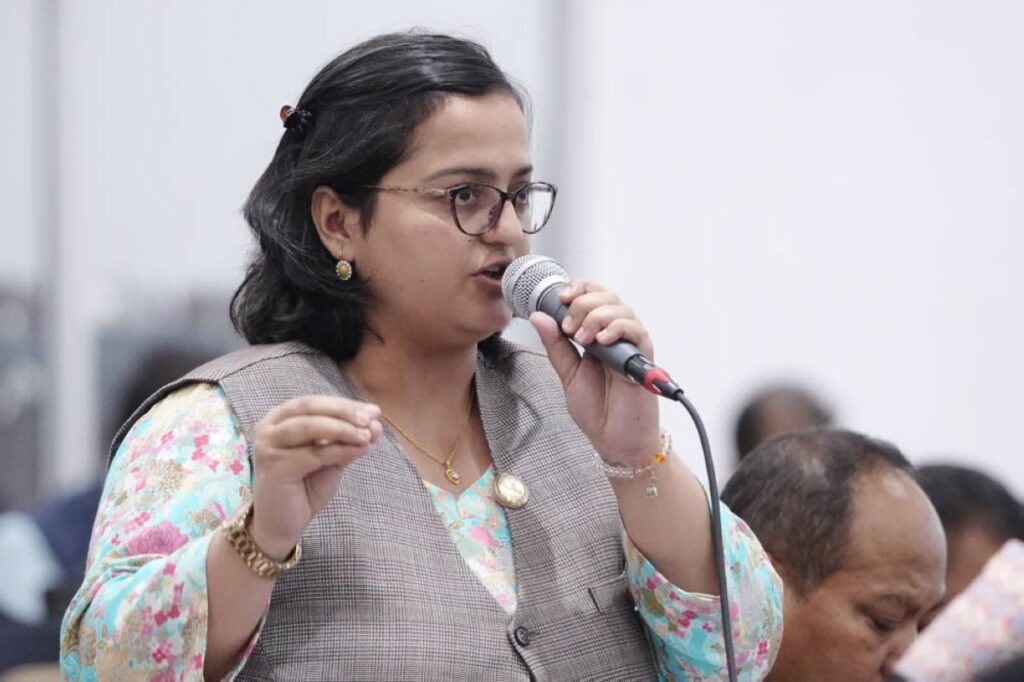
Members of Parliament from across the party lines in the House of Representatives today called for reforms in laws, including capital punishment for rapists after the rape and murder of three-year-old Garima Chaudhary in Bara.
While acknowledging that capital punishment conflicts with constitutional guarantees and Nepal’s international human rights commitments, lawmakers argued that Parliament must have the legislative strength to amend laws in response to severe public outrage.
The three-year-old went missing from her home in Dasdhure Tol, Jitpursimara Sub-Metropolitan City-1, on the morning of August 16. After her mother, Manmati Chaudhary searched for her unsuccessfully for over three hours, local police were alerted. Her body was recovered two days later in a nearby abandoned house.
Drawing on recent violent crimes against women in Nepal and elsewhere, several MPs urged the government to go beyond standard prison sentences and relief packages.
Prakash Pathak of the Rastriya Swatantra Party (RSP) raised the murder of 25-year-old Lakshmi Rajbanshi, who was killed in her room in Japan, as well as the disappearance of 12-year-old Rebika Bishwakarma, a Grade VII student from Haldibari-2, Jhapa, who has been missing for two days.
Urging the Home Ministry to launch an immediate search for Bishwakarma, Pathak said: “Whether at home or abroad, our daughters are unsafe everywhere. Only those who endure it know the pain. Until when must our daughters become Lakshmi Rajbanshi, Nirmala Panta and Garima Chaudhary?”
Addressing constitutional limitations, Pathak added: “Sub-article 2 of Article 16 of the Constitution guarantees the right to live with dignity. But this does not mean protecting criminals and murderers … Whether it is the constitutional restriction against enacting death penalty laws or human rights treaties to which Nepal is a state party, they must now be amended. This House must demonstrate that capability.”
He proposed that convicted rapists and murderers should no longer receive standard state rations in prison and should instead face execution upon conviction.
Ashika Tamang, also of the RSP, called for extreme punishment: “If possible, provisions for hanging rapists must be made. If not, laws should be enacted to amputate the organ used to commit the rape.”
Shraddha Kunwar Chhetri of RSP argued that punitive action should be determined by the severity of the crime rather than strict adherence to standard constitutional interpretation: “Pickpockets and rapists cannot be kept in the same room and punished equally.”
Ranju Darshana of RSP noted the irony of daughters being unsafe in a society that reveres women, calling for awareness and reform initiatives beginning at the school level.
Shahjan Khatun and Ninukumari Karna of the Nepali Congress, Radhika Ramtel of the Shram Sanskriti Party, and Padma Aryal of the CPN-UML each questioned where perpetrators derive the audacity to commit such acts, calling on the state to strengthen control measures and provide formal answers.
Beyond calls for harsher punishment, several lawmakers sharply criticised the government’s handling of the victim’s family, rejecting administrative compromise agreements in favour of longterm justice.
Pramila Kumari Gachhadar of the Nepali Congress objected to the government’s approach of reaching local administrative accords and offering relief packages: “I want to ask the government: Will erecting a statue bring back the life of a three-year-old girl? An agreement paper may temporarily stop protests, and relief may ease momentary pain, but it cannot restore long-term perception of justice and trust in the state.”
She further demanded strict action against facilitators who attempt to broker compromises in cases of heinous crime, warning that senior ministers overriding local administration weakens public trust.
Balawati Sharma of the Nepal Communist Party (NCP) said the rape and murder of the child in Bara had brought shame upon the entire state and raised serious questions about executive accountability. “Daughters are unsafe in their own courtyards, creating a tragic situation where victim families must take to the streets to beg for justice,” she said, urging the government to deliver immediate compensation to the family alongside strict justice.