


KATHMANDU, AUGUST 13
The Ministry of Culture, Tourism and Civil Aviation, with support from UNESCO, has launched a six-day community-based workshop to strengthen the documentation and safeguarding of Nepal’s intangible cultural heritage.
The workshop, part of the programme “Development of Inventory of Intangible Cultural Heritage Covering All Seven Provinces of Nepal,” brought together 40 participants, including 16 women and 24 men. Youth accounted for 30 percent of the participants.
Representatives of the Newa, Tamang, Chepang, Thami, Gurung and Siyar Indigenous communities from Bagmati and Gandaki provinces, along with municipal officials and ministry representatives, participated in the workshop.
Opening the programme, Ministry Joint Secretary Suresh Suras Shrestha highlighted Nepal’s policies and legal frameworks for safeguarding intangible cultural heritage and reaffirmed the government’s commitment to working with UNESCO on the initiative.
The workshop is the first of three six-day community-based workshops being conducted under the 2003 UNESCO Convention for the Safeguarding of the Intangible Cultural Heritage.
Participants were trained in documenting cultural practices and developing community-led inventories, with emphasis on ensuring that cultural knowledge, practices and traditions are transmitted from one generation to another.
UNESCO Representative to Nepal Jaco du Toit said the initiative aims to document at least 20 intangible cultural heritage elements from 17 Indigenous communities across all seven provinces.
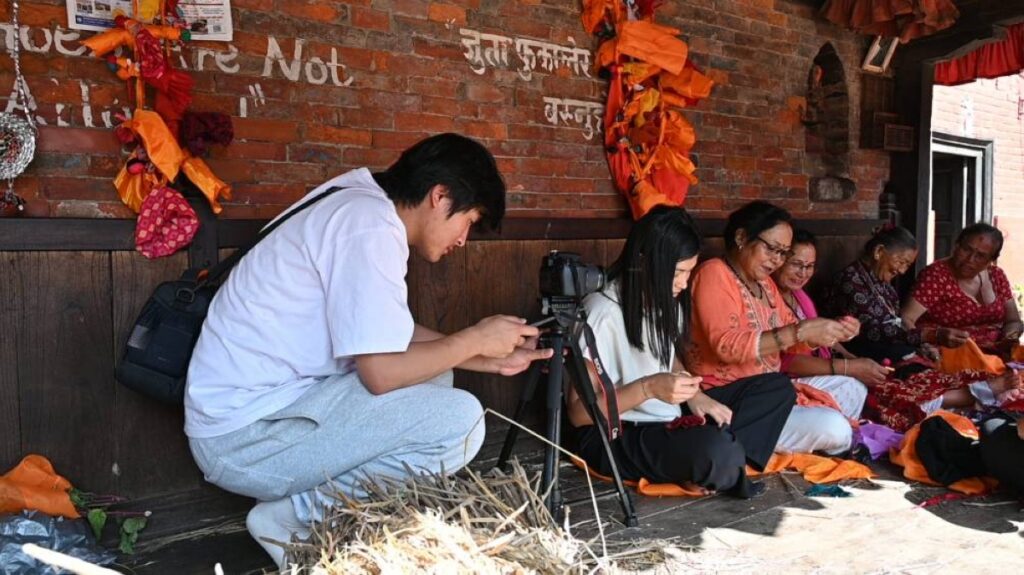
As part of the practical training, participants visited Bhaktapur, where they observed and documented Gathamuga, a post-harvest Newa festival. The field exercise was facilitated by representatives of Ward 9 and Newa Dey Daboo and included interaction with local government representatives at the Ward Office in Dattatraya.
The workshop also emphasised ethical, community-led documentation, including the importance of obtaining consent as an ongoing process based on trust and participation rather than as a one-time formality.
Participants are expected to use the skills and tools gained through the workshop to help communities document, validate, maintain and transmit their living cultural heritage.